Ta Ya identifies material topics through materiality analysis, providing direction for the group's sustainability policy and ensuring proper attention to crucial sustainability issues.
Methodology of Materiality Assessment
The Business Planning Office conducts materiality analysis following GRI 3 Material Topics 2021 and performs double materiality assessment in accordance with CSRD double materiality disclosure requirements (Article 19a(1) and Article 29a(1) of Directive).
1. Understanding the organization's context
The Business Planning Office considers sustainability trends relevant to organizational operations (including economic, environmental, people, and human rights aspects), research reports, and international sustainability standards to understand the sustainability context of the value chain, thereby identifying 18 sustainability topics.
2. Identify impacts
The Business Planning Office, in collaboration with external consultants, identifies the actual and potential impacts along TA YA's value chain, including positive and negative, internal and external impacts. These impacts are derived from stakeholder feedback, supplier ESG impact survey, the TCFD risk identification list, and publicly available information such as the business violation inquiry platform.
3. Assess the significance of the impacts
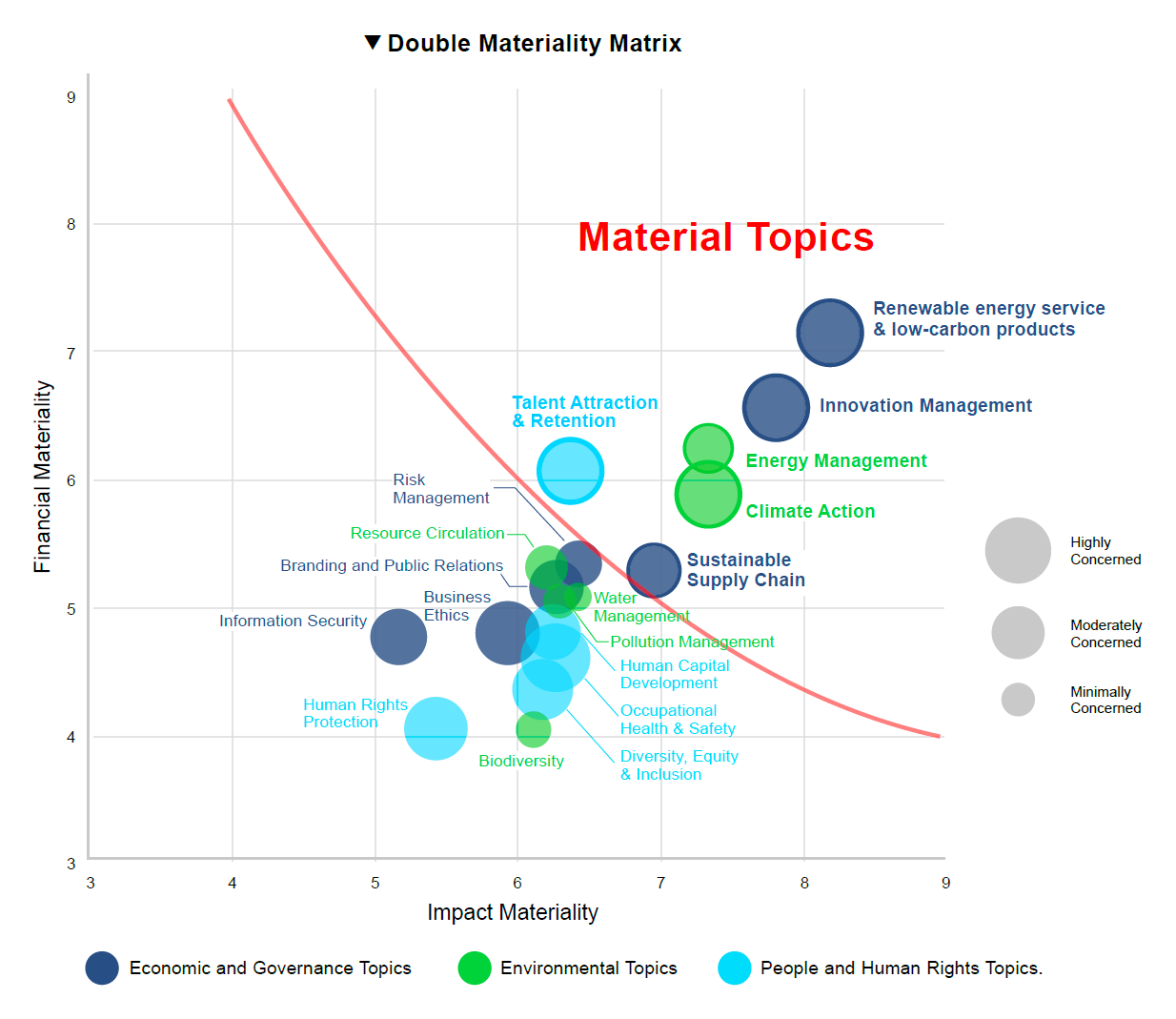
In accordance with the CSRD requirement for double materiality, Ta Ya conducted a double materiality analysis referencing the ESRS Guidelines 1: Double materiality conceptual guidelines. This analysis included evaluating Impact Materiality and Financial Materiality. The significance value was calculated based on quantified values for the intensity and likelihood of the impact, thus assessing the significance of the Group's impacts on ESG factors and the significance of the financial impacts the Group faces. (For details, please refer to Pages 17–18.)
4. Prioritize the most significant impacts
A "Double Materiality Value" was obtained by multiplying the Impact Materiality value and the Financial Materiality value and then calculating the square root. The 18 sustainability topics were then ranked from highest to lowest based on this value. Following discussions between the Sustainability Working Group and the consultant, sustainability topics with a Double Materiality Value exceeding 6.00 were selected as material issues.
These material issues were submitted by the Business Planning Office to the Sustainable Development Committee (chaired by an Independent Director) for review in May. After approval, the material issues were reported by the Sustainable Development Committee to the Board of Directors in August, thereby establishing them as the Group's annual material issues. Notification was provided to all employees in October via the electronic bulletin board.
Material Topics 2025
In 2025, six material topics were identified: Renewable Energy Service, Innovation Management, Energy Management, Climate Action, Talent Attraction and Retention, and Sustainable Supply Chain.
Management of Material Issues
The management of material issues is the responsibility of the Business Planning Office and is overseen by the Sustainable Development Committee. The Business Planning Office reports progress to the Sustainable Development Committee bi-annually and also provides an update on the achievement of material issue targets and management progress at the Group Strategy Meeting in December. Starting in 2025, the Business Planning Office will incorporate material issues into its monthly meeting tracking indicators and report progress to the Chairman at quarterly meetings.